Teach Lições com laboratórios remotos

Catálogo para professores

Lições do LabsLand Teach

Consulte atividades públicas com laboratórios remotos antes de entrar para usá-las com uma turma.

Limpar
Mais filtros

386 lições

386 lições públicas disponíveis

Cellular Respiration
  • Cellular Respiration
  • 60 min
  • High school biology / upper secondary science
  • English

Cellular Respiration: how activation changes CO2 release

Students use the Cellular Respiration remote lab to compare CO2 release from water-activated, acid-activated, and dry seeds, then calculate respiration rates from real readings.

  • Explain why CO2 concentration in a closed seed chamber can be evidence of cellular respiration.
  • Use the Cellular Respiration remote lab to record pCO2 readings for seed activation conditions.

Inclui perguntas e campos de resposta para os estudantes.

Boyle's Law
  • Boyle's Law
  • 25 min
  • Ciências nos anos finais do ensino fundamental
  • Português (Brasil)

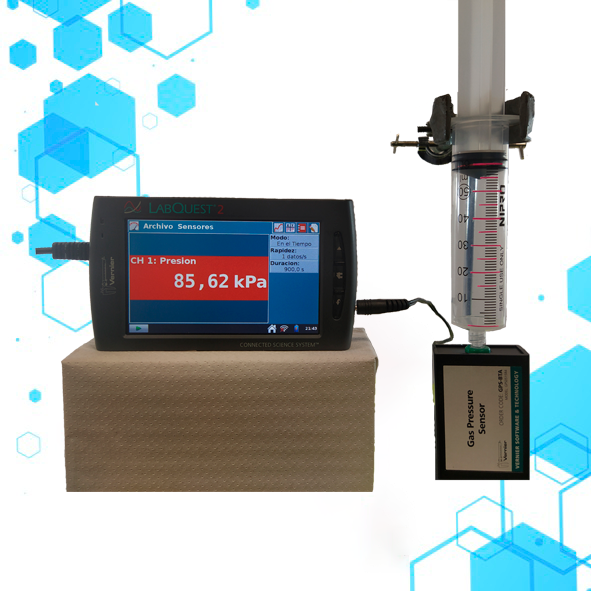
Comprimir o ar: o que acontece com a pressão?

Use quatro leituras de um ensaio real com seringa para descobrir o que acontece com a pressão quando o ar aprisionado tem menos espaço.

  • Coletar quatro leituras de pressão do ensaio de Boyle com a seringa de 20 mL.
  • Descrever o sentido da mudança de pressão à medida que o volume diminui.

Inclui perguntas e campos de resposta para os estudantes.

Conservation of Momentum
  • Conservation of Momentum
  • 60 min
  • Física do Ensino Médio
  • Português (Brasil)

Conservação do momento linear: colisões com carrinhos reais

Os estudantes usam o laboratório remoto de Conservação do Momento Linear da Universidade de Fort Hare para comparar colisões elásticas e inelásticas, calcular razões de velocidades, testar hipóteses do modelo e explicar limitações de dados reais.

  • Usar um laboratório remoto real com dois carrinhos para obter evidências de velocidade antes e depois de colisões.
  • Distinguir os resultados de colisões elásticas e inelásticas.

Inclui perguntas e campos de resposta para os estudantes.

Conservación del Momento
  • Conservación del Momento
  • 60 min
  • Secundaria (15–17 años)
  • Español

Conservación del momento lineal: choques con carros reales

El alumnado usa el laboratorio remoto de Conservación del Momento de University of Fort Hare para comparar choques elásticos e inelásticos, calcular cocientes de velocidad, comprobar supuestos del modelo de momento lineal y explicar límites de datos reales.

  • Usar un laboratorio remoto real de dos carros para recoger evidencias de velocidades antes y después.
  • Distinguir resultados de choques elásticos e inelásticos.

Inclui perguntas e campos de resposta para os estudantes.

Conservation of Momentum
  • Conservation of Momentum
  • 60 min
  • Secondary (ages 15–17)
  • English

Conservation of Momentum: collisions with real carts

Students use the University of Fort Hare Conservation of Momentum remote lab to compare elastic and inelastic cart collisions, calculate velocity ratios, test model assumptions, and explain real-data limitations.

  • Use a real remote two-cart lab to collect before-and-after velocity evidence.
  • Distinguish elastic and inelastic collision outcomes.

Inclui perguntas e campos de resposta para os estudantes.

Water Heating and Cooling Curves
  • Water Heating and Cooling Curves
  • 70 min
  • Mudanças de fase no Ensino Médio / 9º ano ao 1º ano
  • Português (Brasil)

Curvas de aquecimento e resfriamento da água: mudanças de fase em vídeos reais

Os estudantes usam o laboratório remoto de Curvas de Aquecimento e Resfriamento da Água da UFH para ler quadros reais do termômetro, comparar potência alta, potência baixa e resfriamento, construir gráficos de temperatura pelo tempo e explicar os patamares de mudança de fase.

  • Usar um laboratório remoto real para coletar evidências de temperatura pelo tempo em vídeos.
  • Distinguir trechos inclinados de aquecimento ou resfriamento de patamares de mudança de fase.

Inclui perguntas e campos de resposta para os estudantes.

Curvas de Calentamiento y Enfriamiento del Agua
  • Curvas de Calentamiento y Enfriamiento del Agua
  • 70 min
  • Secundaria (14–17 años)
  • Español

Curvas de calentamiento y enfriamiento del agua: cambios de estado con video real

El alumnado usa el laboratorio remoto de la UFH para leer fotogramas reales del termómetro, comparar calor alto, calor bajo y enfriamiento, graficar temperatura frente a tiempo y explicar mesetas de cambio de estado.

  • Usar un laboratorio remoto real para recoger evidencia temperatura-tiempo desde video.
  • Distinguir pendientes de calentamiento/enfriamiento de mesetas de cambio de estado.

Inclui perguntas e campos de resposta para os estudantes.
Cámara Termográfica
  • Cámara Termográfica
  • 50 min
  • Secundaria (14–16 años)
  • Español

Detectives de calor con cámara termográfica

El alumnado usa la cámara termográfica remota para observar diferencias de temperatura superficial, distinguir fuentes de calor y proponer una mejora justificada.

  • Usar una imagen o video termográfico para identificar zonas relativamente más calientes o frías.
  • Distinguir fuente de calor, superficie de referencia y zona de incertidumbre.

Inclui perguntas e campos de resposta para os estudantes.
Thermographic Camera
  • Thermographic Camera
  • 50 min
  • Menengah rendah / awal menengah atas
  • Bahasa Melayu

Detektif haba dengan kamera termografi

Pelajar menggunakan kamera termografi jauh untuk memerhatikan perbezaan suhu permukaan, membezakan sumber haba dan mencadangkan penambahbaikan yang disokong oleh bukti.

  • Menggunakan imej atau video termografi untuk mengenal pasti zon yang relatif lebih panas atau lebih sejuk.
  • Membezakan sumber haba, permukaan rujukan dan zon yang tidak pasti.

Inclui perguntas e campos de resposta para os estudantes.
Planarians
  • Planarians
  • 40 min
  • Menengah rendah / awal menengah atas
  • Bahasa Melayu

Detektif planaria: kenal pasti bahan misteri

Aktiviti ringkas untuk murid menengah rendah dan awal menengah atas: murid membuka makmal Planaria dalam mod detektif, mengira lintasan garisan bagi kawalan E dan dua sampel misteri, mengenal pasti sampel dengan pergerakan paling tinggi dan paling rendah, kemudian menulis kesimpulan berhati-hati berdasarkan bukti.

  • Mentakrifkan peraturan yang adil untuk mengira lintasan garisan semasa pemerhatian planaria.
  • Menggunakan bahan E sebagai kawalan air apabila membandingkan dua bahan misteri.

Inclui perguntas e campos de resposta para os estudantes.
Thermographic Camera
  • Thermographic Camera
  • 50 min
  • Ensino Fundamental II / Ensino Médio inicial
  • Português (Brasil)

Detetives do calor com uma câmera termográfica

Os estudantes usam uma câmera termográfica remota para observar diferenças de temperatura nas superfícies, distinguir fontes de calor e propor uma melhoria justificada.

  • Usar uma imagem ou um vídeo termográfico para identificar zonas relativamente mais quentes ou mais frias.
  • Distinguir uma fonte de calor, uma superfície de referência e uma zona de incerteza.

Inclui perguntas e campos de resposta para os estudantes.

Plant Tissues
  • Plant Tissues
  • 35 min
  • Sekolah rendah (umur 10–12 tahun)
  • Bahasa Melayu

Di dalam tumbuhan: pengembaraan melalui mikroskop

Murid sekolah rendah menggunakan makmal jarak jauh Tisu Tumbuhan untuk memerhatikan batang sebenar pada pembesaran 4x dan 40x, melukis perkara yang dilihat, serta menerangkan bahawa tumbuhan mempunyai banyak sel dan salur kecil yang membawa air.

  • Membuka makmal Tisu Tumbuhan dan memerhatikan batang sebenar dengan mikroskop.
  • Membandingkan pandangan keseluruhan batang pada 4x dengan pandangan dekat pada 40x.

Inclui perguntas e campos de resposta para os estudantes.
Altera DE1-SoC
  • Altera DE1-SoC
  • 50 min
  • Undergraduate, introductory
  • English

Digital Logic on the DE1-SoC (1/6): Your first gates on real hardware

Students write Verilog for basic logic gates, synthesize and upload to the DE1-SoC, and verify truth tables on real switches and LEDs.

  • Explain that Verilog describes hardware, not a program that runs step by step.
  • Use the LabsLand DE1-SoC Verilog workflow: edit, Synthesize, Upload, observe.

Inclui perguntas e campos de resposta para os estudantes.
Altera DE1-SoC
  • Altera DE1-SoC
  • 70 min
  • Undergraduate, introductory
  • English

Digital Logic on the DE1-SoC (2/6): Truth tables, SOP/POS, K-maps, and a multiplexer

Students connect truth tables, Boolean forms, Karnaugh maps, and multiplexers, then test minimized combinational logic on DE1-SoC hardware.

  • Derive the sum-of-products (SOP) and product-of-sums (POS) forms from a truth table.
  • Minimize a Boolean function with a Karnaugh map and read off the simplified expression.

Inclui perguntas e campos de resposta para os estudantes.
Altera DE1-SoC
  • Altera DE1-SoC
  • 55 min
  • Undergraduate, introductory
  • English

Digital Logic on the DE1-SoC (3/6): Memory — flip-flops and registers

Students build D flip-flop and register circuits in Verilog, test clock and reset behavior, and distinguish combinational logic from stored state.

  • Explain why sequential logic needs memory while combinational logic does not.
  • Describe a D flip-flop as sample-and-hold on the clock edge, with synchronous reset.

Inclui perguntas e campos de resposta para os estudantes.
Altera DE1-SoC
  • Altera DE1-SoC
  • 65 min
  • Undergraduate, introductory
  • English

Digital Logic on the DE1-SoC (4/6): Counters and shift registers

Students implement counters and shift registers in Verilog, observe sequential LED patterns, and explain clocked updates on hardware.

  • Explain what a clock divider does and use it to make 50 MHz behavior visible to the eye and camera.
  • Build a 4-bit counter and read its value on the LEDs and on a 7-segment display.

Inclui perguntas e campos de resposta para os estudantes.

Altera DE1-SoC
  • Altera DE1-SoC
  • 70 min
  • Undergraduate, introductory
  • English

Digital Logic on the DE1-SoC (5/6): Finite state machines

Students design a finite-state machine for traffic-light-style output, synthesize it, and verify state transitions on the DE1-SoC.

  • Explain what a finite state machine is in terms of states, transitions, and outputs.
  • Distinguish Moore machines (outputs from state) from Mealy machines (outputs from state and inputs).

Inclui perguntas e campos de resposta para os estudantes.
Altera DE1-SoC
  • Altera DE1-SoC
  • 75 min
  • Undergraduate, introductory
  • English

Digital Logic on the DE1-SoC (6/6): FSM capstone — a vending machine

Students synthesize and upload a Verilog vending-machine FSM to the DE1-SoC, then test switch inputs, KEY reset, LEDR dispense, and HEX credit output.

  • Design and extend a non-trivial finite state machine on real hardware.
  • Build a vending-machine controller whose state is the accumulated credit.

Inclui perguntas e campos de resposta para os estudantes.
Altera DE1-SoC
  • Altera DE1-SoC
  • 50 min
  • Undergraduate, introductory
  • English

Digital Logic on the DE1-SoC with VHDL (1/6): Your first gates on real hardware

Students write VHDL for basic logic gates, synthesize and upload to the DE1-SoC, and verify truth tables on real switches and LEDs.

  • Explain that VHDL describes hardware, not a program that runs step by step.
  • Use the LabsLand DE1-SoC VHDL workflow: edit, Synthesize, Upload, observe.

Inclui perguntas e campos de resposta para os estudantes.
Altera DE1-SoC
  • Altera DE1-SoC
  • 45 min
  • Undergraduate, introductory
  • English

Digital Logic on the DE1-SoC with VHDL (2/6): Truth tables, SOP, K-maps, and optional extensions

Students implement a Boolean function in VHDL as a canonical SOP, minimize it with a K-map, and try optional POS/MUX extensions on the DE1-SoC if time permits.

  • Derive a canonical sum-of-products (SOP) form from a truth table.
  • Minimize a Boolean function with a Karnaugh map and read off the simplified expression.

Inclui perguntas e campos de resposta para os estudantes.

Altera DE1-SoC
  • Altera DE1-SoC
  • 55 min
  • Undergraduate, introductory
  • English

Digital Logic on the DE1-SoC with VHDL (3/6): Memory -- flip-flops and registers

Students use VHDL clocked processes to build a D flip-flop and an 8-bit register, then verify memory behavior on real hardware.

  • Explain why sequential logic needs memory while combinational logic does not.
  • Describe a D flip-flop as sample-and-hold on the clock edge, with synchronous reset.

Inclui perguntas e campos de resposta para os estudantes.

Altera DE1-SoC
  • Altera DE1-SoC
  • 40 min
  • Undergraduate, introductory
  • English

Digital Logic on the DE1-SoC with VHDL (4/6): Counters and optional shift registers

Students build a VHDL counter and clock divider, then try optional BCD and shift-register extensions if time permits.

  • Explain what a clock divider does and use it to make 50 MHz behavior visible to the eye and camera.
  • Build a 4-bit counter and read its value on the LEDs and on a 7-segment display.

Inclui perguntas e campos de resposta para os estudantes.

Altera DE1-SoC
  • Altera DE1-SoC
  • 45 min
  • Undergraduate, introductory
  • English

Digital Logic on the DE1-SoC with VHDL (5/6): Finite state machines

Students build and modify a Moore traffic-light FSM on the DE1-SoC, with an optional Mealy detector extension.

  • Explain what a finite state machine is in terms of states, transitions, and outputs.
  • Explain why the traffic-light controller is a Moore machine, and recognize a Mealy detector as an optional extension.

Inclui perguntas e campos de resposta para os estudantes.