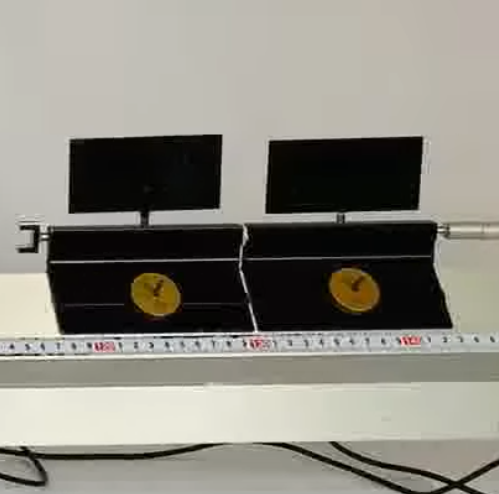
Os estudantes usam o laboratório remoto de Conservação do Momento Linear da Universidade de Fort Hare para comparar colisões elásticas e inelásticas, calcular razões de velocidades, testar hipóteses do modelo e explicar limitações de dados reais.
Usar um laboratório remoto real com dois carrinhos para obter evidências de velocidade antes e depois de colisões.
Distinguir os resultados de colisões elásticas e inelásticas.
Include domande e campi di risposta per gli studenti.
El alumnado usa el laboratorio remoto de Conservación del Momento de University of Fort Hare para comparar choques elásticos e inelásticos, calcular cocientes de velocidad, comprobar supuestos del modelo de momento lineal y explicar límites de datos reales.
Usar un laboratorio remoto real de dos carros para recoger evidencias de velocidades antes y después.
Distinguir resultados de choques elásticos e inelásticos.
Include domande e campi di risposta per gli studenti.
Students use the University of Fort Hare Conservation of Momentum remote lab to compare elastic and inelastic cart collisions, calculate velocity ratios, test model assumptions, and explain real-data limitations.
Use a real remote two-cart lab to collect before-and-after velocity evidence.
Distinguish elastic and inelastic collision outcomes.
Include domande e campi di risposta per gli studenti.
Os estudantes usam o laboratório remoto de Curvas de Aquecimento e Resfriamento da Água da UFH para ler quadros reais do termômetro, comparar potência alta, potência baixa e resfriamento, construir gráficos de temperatura pelo tempo e explicar os patamares de mudança de fase.
Usar um laboratório remoto real para coletar evidências de temperatura pelo tempo em vídeos.
Distinguir trechos inclinados de aquecimento ou resfriamento de patamares de mudança de fase.
Include domande e campi di risposta per gli studenti.
El alumnado usa el laboratorio remoto de la UFH para leer fotogramas reales del termómetro, comparar calor alto, calor bajo y enfriamiento, graficar temperatura frente a tiempo y explicar mesetas de cambio de estado.
Usar un laboratorio remoto real para recoger evidencia temperatura-tiempo desde video.
Distinguir pendientes de calentamiento/enfriamiento de mesetas de cambio de estado.
Include domande e campi di risposta per gli studenti.
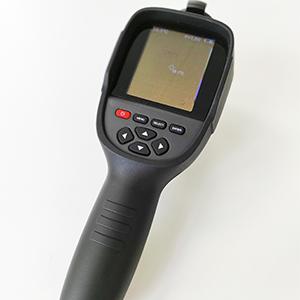
Eine gewöhnliche Decke verbirgt einen Temperaturhinweis. Entdecke ihn mit einer echten Wärmebildkamera, wähle eine Stelle zum Untersuchen und unterscheide Beobachtungen von Vermutungen.
Einen temperaturbezogenen Hinweis in einer echten Wärmebildaufnahme finden.
Eine Beobachtung von einer möglichen Erklärung unterscheiden, für die weitere Belege nötig sind.
Include domande e campi di risposta per gli studenti.
Un soffitto dall’aspetto normale nasconde un indizio legato alla temperatura. Scoprilo con una vera termocamera, scegli dove indagare e distingui le prove dalle ipotesi.
Individuare un indizio legato alla temperatura in una vera registrazione con termocamera.
Distinguere un’osservazione da una possibile spiegazione che richiede altre prove.
Include domande e campi di risposta per gli studenti.
El alumnado usa la cámara termográfica remota para observar diferencias de temperatura superficial, distinguir fuentes de calor y proponer una mejora justificada.
Usar una imagen o video termográfico para identificar zonas relativamente más calientes o frías.
Distinguir fuente de calor, superficie de referencia y zona de incertidumbre.
Include domande e campi di risposta per gli studenti.
Un techo corriente tiene una pista de temperatura. Descúbrela con una cámara térmica real, elige dónde investigar y distingue las pruebas de una suposición.
Localizar una pista relacionada con la temperatura en una grabación de una cámara térmica real.
Distinguir una observación de una posible explicación que necesita más pruebas.
Include domande e campi di risposta per gli studenti.
Un plafond ordinaire cache un indice de température. Révèle-le avec une vraie caméra thermique, choisis où enquêter et distingue une observation d’une supposition.
Localiser un indice lié à la température dans l’enregistrement d’une vraie caméra thermique.
Distinguer une observation d’une explication possible qui nécessite davantage de preuves.
Include domande e campi di risposta per gli studenti.
Un tavan obișnuit ascunde un indiciu legat de temperatură. Descoperă-l cu o cameră termică reală, alege unde să investighezi și separă dovezile de presupuneri.
Localizarea unui indiciu legat de temperatură într-o înregistrare reală cu o cameră termică.
Deosebirea unei observații de o posibilă explicație care necesită mai multe dovezi.
Include domande e campi di risposta per gli studenti.
Pelajar menggunakan kamera termografi jauh untuk memerhatikan perbezaan suhu permukaan, membezakan sumber haba dan mencadangkan penambahbaikan yang disokong oleh bukti.
Menggunakan imej atau video termografi untuk mengenal pasti zon yang relatif lebih panas atau lebih sejuk.
Membezakan sumber haba, permukaan rujukan dan zon yang tidak pasti.
Include domande e campi di risposta per gli studenti.
Plafon yang tampak biasa menyimpan petunjuk tentang suhu. Temukan dengan kamera termal sungguhan, pilih tempat untuk diselidiki, dan bedakan bukti dari dugaan.
Menemukan petunjuk terkait suhu dalam rekaman kamera termal sungguhan.
Membedakan pengamatan dari kemungkinan penjelasan yang masih memerlukan bukti.
Include domande e campi di risposta per gli studenti.
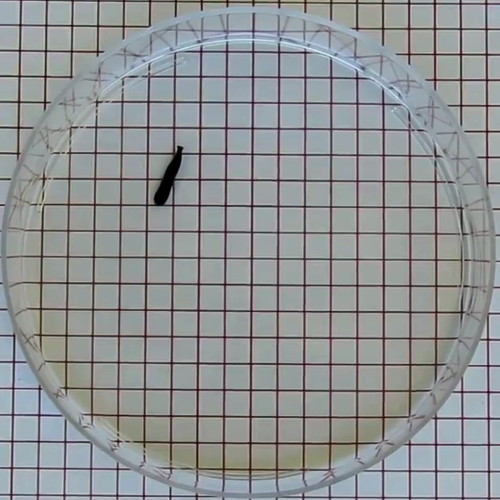
Aktiviti ringkas untuk murid menengah rendah dan awal menengah atas: murid membuka makmal Planaria dalam mod detektif, mengira lintasan garisan bagi kawalan E dan dua sampel misteri, mengenal pasti sampel dengan pergerakan paling tinggi dan paling rendah, kemudian menulis kesimpulan berhati-hati berdasarkan bukti.
Mentakrifkan peraturan yang adil untuk mengira lintasan garisan semasa pemerhatian planaria.
Menggunakan bahan E sebagai kawalan air apabila membandingkan dua bahan misteri.
Include domande e campi di risposta per gli studenti.
Siling yang kelihatan biasa mempunyai petunjuk berkaitan suhu. Dedahkannya dengan kamera terma sebenar, pilih tempat untuk disiasat dan bezakan bukti daripada tekaan.
Mencari kedudukan petunjuk berkaitan suhu dalam rakaman kamera terma sebenar.
Membezakan pemerhatian daripada penjelasan yang mungkin benar tetapi memerlukan lebih banyak bukti.
Include domande e campi di risposta per gli studenti.
Os estudantes usam uma câmera termográfica remota para observar diferenças de temperatura nas superfícies, distinguir fontes de calor e propor uma melhoria justificada.
Usar uma imagem ou um vídeo termográfico para identificar zonas relativamente mais quentes ou mais frias.
Distinguir uma fonte de calor, uma superfície de referência e uma zona de incerteza.
Include domande e campi di risposta per gli studenti.
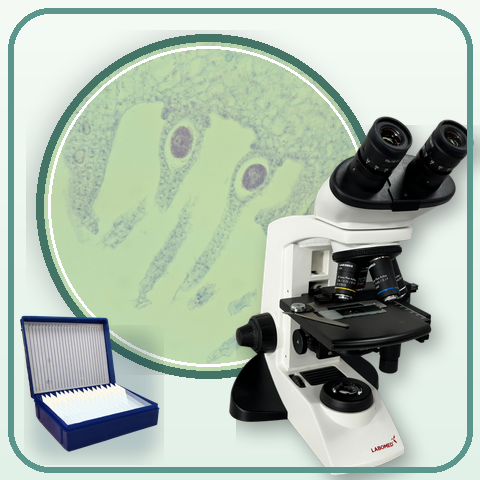
Murid sekolah rendah menggunakan makmal jarak jauh Tisu Tumbuhan untuk memerhatikan batang sebenar pada pembesaran 4x dan 40x, melukis perkara yang dilihat, serta menerangkan bahawa tumbuhan mempunyai banyak sel dan salur kecil yang membawa air.
Membuka makmal Tisu Tumbuhan dan memerhatikan batang sebenar dengan mikroskop.
Membandingkan pandangan keseluruhan batang pada 4x dengan pandangan dekat pada 40x.
Include domande e campi di risposta per gli studenti.