
Teach Remote lab lessons

Educator catalog

LabsLand Teach lessons

Preview public remote-lab activities before signing in to use them with a class.

Reset
More filters

416 lessons

416 public lessons available

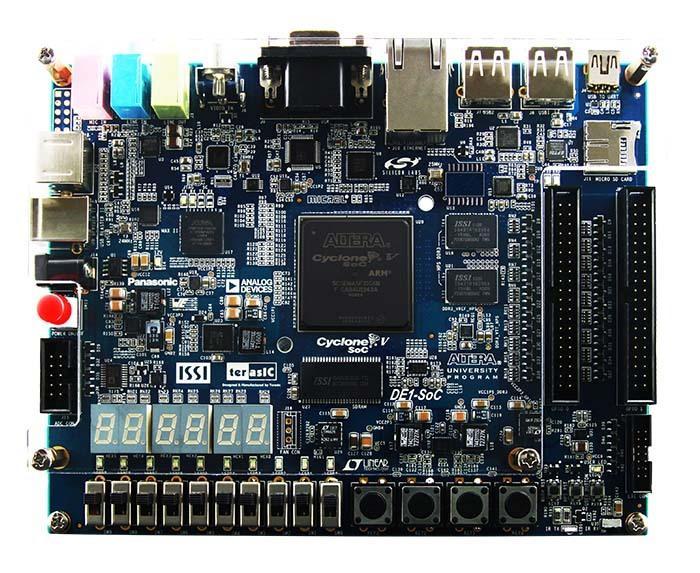
Altera DE1-SoC
  • Altera DE1-SoC
  • 50 min
  • Undergraduate, introductory
  • English

Digital Logic on the DE1-SoC with VHDL (1/6): Your first gates on real hardware

Students write VHDL for basic logic gates, synthesize and upload to the DE1-SoC, and verify truth tables on real switches and LEDs.

  • Explain that VHDL describes hardware, not a program that runs step by step.
  • Use the LabsLand DE1-SoC VHDL workflow: edit, Synthesize, Upload, observe.

Includes student questions and response prompts.
Altera DE1-SoC
  • Altera DE1-SoC
  • 45 min
  • Undergraduate, introductory
  • English

Digital Logic on the DE1-SoC with VHDL (2/6): Truth tables, SOP, K-maps, and optional extensions

Students implement a Boolean function in VHDL as a canonical SOP, minimize it with a K-map, and try optional POS/MUX extensions on the DE1-SoC if time permits.

  • Derive a canonical sum-of-products (SOP) form from a truth table.
  • Minimize a Boolean function with a Karnaugh map and read off the simplified expression.

Includes student questions and response prompts.
Altera DE1-SoC
  • Altera DE1-SoC
  • 55 min
  • Undergraduate, introductory
  • English

Digital Logic on the DE1-SoC with VHDL (3/6): Memory -- flip-flops and registers

Students use VHDL clocked processes to build a D flip-flop and an 8-bit register, then verify memory behavior on real hardware.

  • Explain why sequential logic needs memory while combinational logic does not.
  • Describe a D flip-flop as sample-and-hold on the clock edge, with synchronous reset.

Includes student questions and response prompts.

Altera DE1-SoC
  • Altera DE1-SoC
  • 40 min
  • Undergraduate, introductory
  • English

Digital Logic on the DE1-SoC with VHDL (4/6): Counters and optional shift registers

Students build a VHDL counter and clock divider, then try optional BCD and shift-register extensions if time permits.

  • Explain what a clock divider does and use it to make 50 MHz behavior visible to the eye and camera.
  • Build a 4-bit counter and read its value on the LEDs and on a 7-segment display.

Includes student questions and response prompts.

Altera DE1-SoC
  • Altera DE1-SoC
  • 45 min
  • Undergraduate, introductory
  • English

Digital Logic on the DE1-SoC with VHDL (5/6): Finite state machines

Students build and modify a Moore traffic-light FSM on the DE1-SoC, with an optional Mealy detector extension.

  • Explain what a finite state machine is in terms of states, transitions, and outputs.
  • Explain why the traffic-light controller is a Moore machine, and recognize a Mealy detector as an optional extension.

Includes student questions and response prompts.
Altera DE1-SoC
  • Altera DE1-SoC
  • 45 min
  • Undergraduate, introductory
  • English

Digital Logic on the DE1-SoC with VHDL (6/6): FSM capstone -- a vending machine

Students build a VHDL vending-machine FSM, test credit paths on hardware, and try optional change-return checkpoints if time permits.

  • Run and explain a non-trivial finite state machine on real hardware.
  • Build a vending-machine controller whose state is the accumulated credit.

Includes student questions and response prompts.
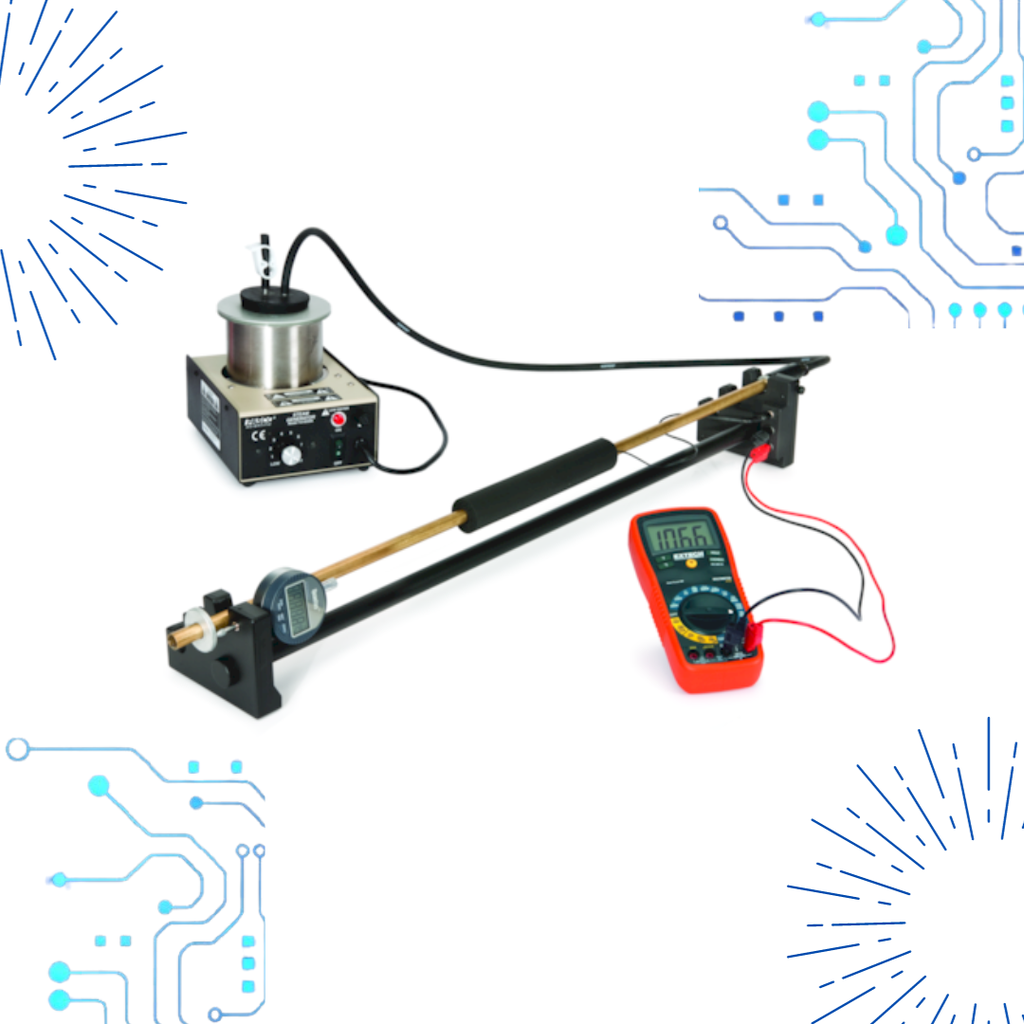
Thermal Expansion
  • Thermal Expansion
  • 55 min
  • Física / Química do Ensino Médio
  • Português (Brasil)

Dilatação térmica: comparação de metais com evidências reais em vídeo

Os estudantes usam o laboratório remoto de Dilatação Térmica para comparar alumínio, cobre e latão e, em seguida, distinguem observações diretas de afirmações baseadas em um modelo.

  • Usar o modelo de dilatação linear para prever como os materiais devem se comparar.
  • Usar o laboratório remoto para observar pelo menos dois ensaios com materiais diferentes.

Includes student questions and response prompts.
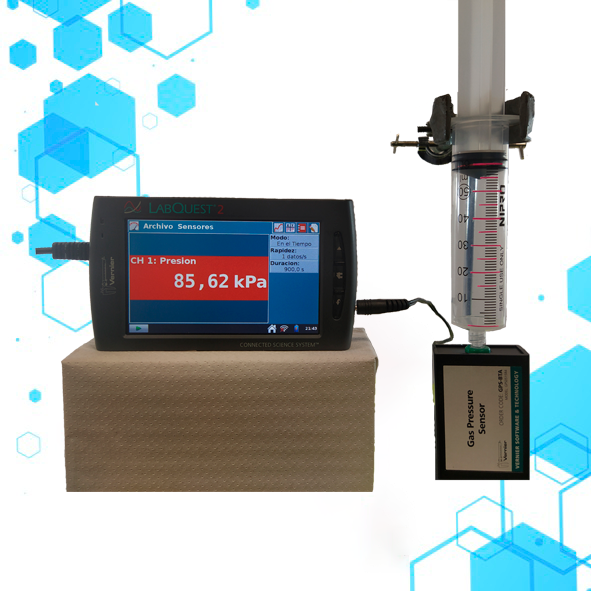
Boyle's Law
  • Boyle's Law
  • 40 min
  • upper secondary science
  • English

Do two Boyle runs agree?

Compare two real Boyle runs at matched volumes and decide what repeatability does—and does not—tell us.

  • Collect matched readings from two prerecorded 60 mL trials.
  • Calculate absolute and percentage differences at three matched volumes.

Includes student questions and response prompts.

Boyle's Law
  • Boyle's Law
  • 40 min
  • Ciências no ensino médio
  • Português (Brasil)

Dois ensaios de Boyle concordam?

Compare dois ensaios reais de Boyle em volumes correspondentes e decida o que a repetibilidade nos informa e o que ela não informa.

  • Coletar leituras correspondentes de dois ensaios pré-gravados de 60 mL.
  • Calcular diferenças absolutas e percentuais em três volumes correspondentes.

Includes student questions and response prompts.

Ley de Snell
  • Ley de Snell
  • 32 min
  • Secundaria (12–13 años)
  • Español

El misterio de la pajita rota

Resuelve un misterio cotidiano comparando en el laboratorio remoto cómo atraviesa la luz el agua a 0° y a 60°.

  • Predecir visualmente qué camino seguirá la luz al entrar en el agua.
  • Comparar cualitativamente el rayo en agua a 0° y a 60°.

Includes student questions and response prompts.

Ley de Boyle
  • Ley de Boyle
  • 35 min
  • Secundaria (14–16 años)
  • Español

El reto de la constante PV

Usa cinco pares reales de presión y volumen para decidir si una regla de multiplicación resiste una compresión completa.

  • Recoger cinco pares seleccionados de presión y volumen del ensayo de 60 mL.
  • Calcular PV con unidades coherentes para cada par.

Includes student questions and response prompts.

Valora. Ácido-Base II
  • Valora. Ácido-Base II
  • 30 min
  • Secundaria (12–13 años)
  • Español

El reto del rosa perfecto

Una misión de 25–35 minutos para usar una alarma química y detener una titulación con evidencia visual.

  • Explicar por qué el aspecto de un líquido no basta para conocer sus propiedades químicas.
  • Usar el cambio de color de un indicador como señal para detener el goteo.

Includes student questions and response prompts.

Electronics - Hive
  • Electronics - Hive
  • 30 min
  • First-year university / introductory vocational electronics / upper-secondary electronics
  • English

Electronics Lab Essentials (1/7): read a breadboard before wiring

Students learn how breadboard holes form electrical nodes, trace a complete path, and confirm their interpretation with a real Hive resistance measurement.

  • Define an electrical node and identify connected breadboard holes.
  • Explain why the center trench separates the two terminal strips.

Includes student questions and response prompts.

Electronics - Hive
  • Electronics - Hive
  • 30 min
  • First-year university / introductory vocational electronics / upper-secondary electronics
  • English

Electronics Lab Essentials (2/7): power a circuit with the correct reference

Students learn voltage, polarity, ground/reference, current limiting, and safe power-up habits by measuring two real Hive DC-supply settings.

  • Explain voltage as a difference between two points.
  • Identify positive output, negative output, ground/reference, polarity, and current limit.

Includes student questions and response prompts.

Electronics - Hive
  • Electronics - Hive
  • 30 min
  • First-year university / introductory vocational electronics / upper-secondary electronics
  • English

Electronics Lab Essentials (3/7): measure resistance and voltage correctly

Students choose DMM resistance or DC-voltage mode, connect across the correct nodes, preserve the required powered state, and interpret units and signs.

  • Choose resistance or DC-voltage mode for a stated measurement.
  • Explain why resistance is normally measured on an unpowered circuit.

Includes student questions and response prompts.

Electronics - Hive
  • Electronics - Hive
  • 30 min
  • First-year university / introductory vocational electronics / upper-secondary electronics
  • English

Electronics Lab Essentials (4/7): measure current without creating a short circuit

Students learn why an ammeter is inserted in series, predict and measure real DC current, convert A and mA, and apply a safe physical-meter sequence.

  • Explain why an ammeter is inserted in series rather than placed across a supply.
  • Predict current using Ohm's law and an equivalent resistance.

Includes student questions and response prompts.

Electronics - Hive
  • Electronics - Hive
  • 30 min
  • First-year university / introductory vocational electronics / upper-secondary electronics
  • English

Electronics Lab Essentials (5/7): create a controlled test signal

Students learn waveform, frequency, period, peak-to-peak amplitude, offset, and reference by configuring and observing a real Hive function-generator signal.

  • Identify sine, square, and triangle waveforms.
  • Define frequency, period, peak-to-peak voltage, amplitude, and DC offset.

Includes student questions and response prompts.

Electronics - Hive
  • Electronics - Hive
  • 30 min
  • First-year university / introductory vocational electronics / upper-secondary electronics
  • English

Electronics Lab Essentials (6/7): make a waveform readable and stable

Students learn vertical scale, time base, triggering, two-channel comparison, and graticule measurement using real Hive oscilloscope traces.

  • Relate vertical scale to voltage and horizontal scale to time.
  • Estimate peak-to-peak voltage, period, and frequency from a graticule.

Includes student questions and response prompts.

Electronics - Hive
  • Electronics - Hive
  • 35 min
  • First-year university / introductory vocational electronics / upper-secondary electronics
  • English

Electronics Lab Essentials (7/7): diagnose a bench setup before blaming the circuit

Students integrate breadboard, supply, DMM, generator, and oscilloscope reasoning in three real Hive checks and a reproducible troubleshooting handoff.

  • Choose the correct instrument and powered state for resistance, DC current, and time-varying voltage.
  • Apply a repeatable power-reference-source-path-mode-scale diagnostic sequence.

Includes student questions and response prompts.

Materiales
  • Materiales
  • 55 min
  • Secundaria (14–16 años)
  • Español

Elegir un material: dureza, tenacidad y resistencia

El alumnado usa el laboratorio remoto Materials para comparar evidencias de dureza, impacto y tracción, y formular una recomendación preliminar para una pieza que puede rayarse, golpearse o deformarse.

  • Distinguir dureza, tenacidad y resistencia como propiedades diferentes.
  • Usar resultados del laboratorio Materials para comparar materiales o tratamientos.

Includes student questions and response prompts.

Buoyancy
  • Buoyancy
  • 55 min
  • Física do Ensino Médio
  • Português (Brasil)

Empuxo: a densidade prevê a flutuação

Os estudantes usam o laboratório remoto de Empuxo para testar se a densidade do objeto, e não apenas sua massa, prevê se ele flutua ou afunda na água.

  • Calcular a densidade a partir da massa e do volume de objetos reais do laboratório.
  • Prever se um objeto flutuará ou afundará comparando sua densidade com a da água.

Includes student questions and response prompts.

Buoyancy
  • Buoyancy
  • 55 min
  • Extensão de Física para o Ensino Médio
  • Português (Brasil)

Empuxo: mudando o líquido

Os estudantes comparam gravações selecionadas do laboratório de Empuxo em água, óleo e água com açúcar para investigar como a densidade do líquido altera o limite entre flutuar e afundar.

  • Comparar a densidade de um objeto com a densidade de diferentes líquidos.
  • Explicar por que um mesmo tipo de objeto pode se comportar de maneira diferente em óleo, água e água com açúcar.

Includes student questions and response prompts.

Materials
  • Materials
  • 75 min
  • Ensino superior introdutório
  • Português (Brasil)

Ensaio de impacto em corpo de prova entalhado: tenacidade e evidências de fratura

Os estudantes usam o laboratório remoto Materials para observar ensaios de impacto em corpos de prova entalhados, relacionar a energia de impacto absorvida à tenacidade, comparar tratamentos e interpretar superfícies de fratura com cautela.

  • Explicar por que ensaios de impacto em corpos de prova entalhados são usados para comparar tenacidade.
  • Usar evidências do vídeo e do resultado do ensaio de impacto para comparar tratamentos de materiais.

Includes student questions and response prompts.

Materials
  • Materials
  • 75 min
  • Ensino superior introdutório
  • Português (Brasil)

Ensaio de tração: resistência e ductilidade em um laboratório real de materiais

Os estudantes usam o laboratório remoto Materials para observar um ensaio de tração, interpretar evidências de força-deslocamento, identificar regiões elástica e plástica e comparar resistência e ductilidade sem inventar dados não sustentados.

  • Explicar o que um ensaio de tração mede e o que ele não mede por si só.
  • Identificar resposta elástica, deformação plástica, força máxima e ruptura a partir das evidências do laboratório.

Includes student questions and response prompts.