Teach Pelajaran dengan makmal jarak jauh

Katalog pendidik

Pelajaran LabsLand Teach

Terokai aktiviti makmal jarak jauh yang tersedia kepada umum untuk digunakan bersama kelas anda.

Penapis lain

496 pelajaran

496 pelajaran awam yang tersedia

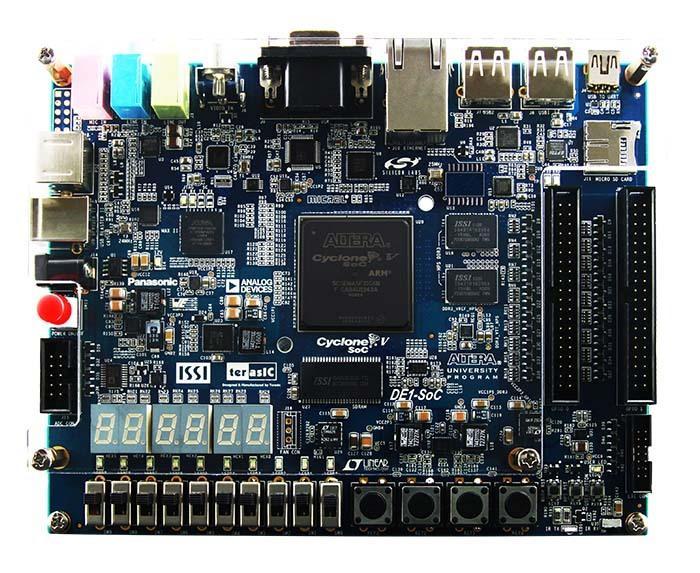
DE1-SoC
  • DE1-SoC
  • 50 min
  • Undergraduate, introductory
  • English

Digital Logic on the DE1-SoC with VHDL (1/6): Your first gates on real hardware

Students write VHDL for basic logic gates, synthesize and upload to the DE1-SoC, and verify truth tables on real switches and LEDs.

  • Explain that VHDL describes hardware, not a program that runs step by step.
  • Use the LabsLand DE1-SoC VHDL workflow: edit, Synthesize, Upload, observe.

Mengandungi soalan dan ruangan jawapan untuk pelajar.

DE1-SoC
  • DE1-SoC
  • 45 min
  • Undergraduate, introductory
  • English

Digital Logic on the DE1-SoC with VHDL (2/6): Truth tables, SOP, K-maps, and optional extensions

Students implement a Boolean function in VHDL as a canonical SOP, minimize it with a K-map, and try optional POS/MUX extensions on the DE1-SoC if time permits.

  • Derive a canonical sum-of-products (SOP) form from a truth table.
  • Minimize a Boolean function with a Karnaugh map and read off the simplified expression.

Mengandungi soalan dan ruangan jawapan untuk pelajar.
DE1-SoC
  • DE1-SoC
  • 55 min
  • Undergraduate, introductory
  • English

Digital Logic on the DE1-SoC with VHDL (3/6): Memory -- flip-flops and registers

Students use VHDL clocked processes to build a D flip-flop and an 8-bit register, then verify memory behavior on real hardware.

  • Explain why sequential logic needs memory while combinational logic does not.
  • Describe a D flip-flop as sample-and-hold on the clock edge, with synchronous reset.

Mengandungi soalan dan ruangan jawapan untuk pelajar.
DE1-SoC
  • DE1-SoC
  • 40 min
  • Undergraduate, introductory
  • English

Digital Logic on the DE1-SoC with VHDL (4/6): Counters and optional shift registers

Students build a VHDL counter and clock divider, then try optional BCD and shift-register extensions if time permits.

  • Explain what a clock divider does and use it to make 50 MHz behavior visible to the eye and camera.
  • Build a 4-bit counter and read its value on the LEDs and on a 7-segment display.

Mengandungi soalan dan ruangan jawapan untuk pelajar.
DE1-SoC
  • DE1-SoC
  • 45 min
  • Undergraduate, introductory
  • English

Digital Logic on the DE1-SoC with VHDL (5/6): Finite state machines

Students build and modify a Moore traffic-light FSM on the DE1-SoC, with an optional Mealy detector extension.

  • Explain what a finite state machine is in terms of states, transitions, and outputs.
  • Explain why the traffic-light controller is a Moore machine, and recognize a Mealy detector as an optional extension.

Mengandungi soalan dan ruangan jawapan untuk pelajar.
DE1-SoC
  • DE1-SoC
  • 45 min
  • Undergraduate, introductory
  • English

Digital Logic on the DE1-SoC with VHDL (6/6): FSM capstone -- a vending machine

Students build a VHDL vending-machine FSM, test credit paths on hardware, and try optional change-return checkpoints if time permits.

  • Run and explain a non-trivial finite state machine on real hardware.
  • Build a vending-machine controller whose state is the accumulated credit.

Mengandungi soalan dan ruangan jawapan untuk pelajar.

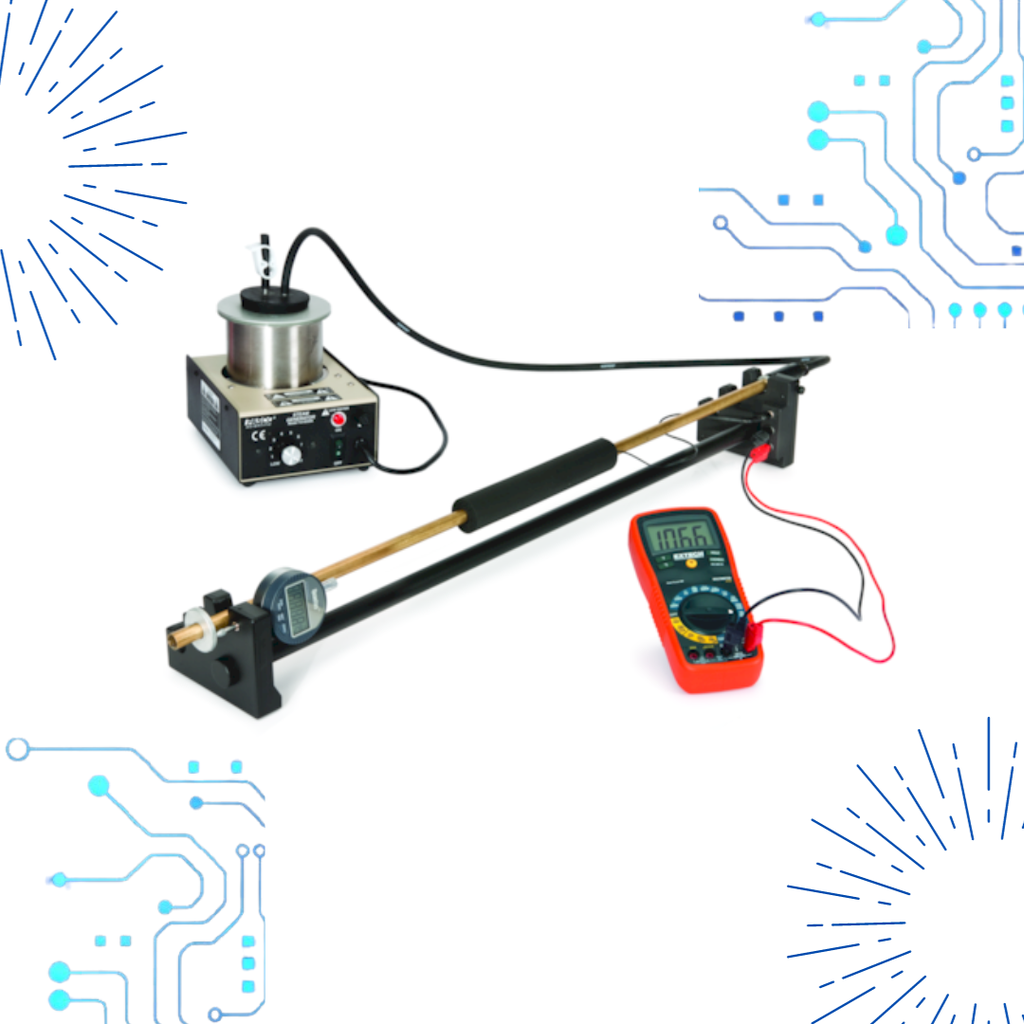
Thermal Expansion
  • Thermal Expansion
  • 55 min
  • Física / Química do Ensino Médio
  • Português (Brasil)

Dilatação térmica: comparação de metais com evidências reais em vídeo

Os estudantes usam o laboratório remoto de Dilatação Térmica para comparar alumínio, cobre e latão e, em seguida, distinguem observações diretas de afirmações baseadas em um modelo.

  • Usar o modelo de dilatação linear para prever como os materiais devem se comparar.
  • Usar o laboratório remoto para observar pelo menos dois ensaios com materiais diferentes.

Mengandungi soalan dan ruangan jawapan untuk pelajar.

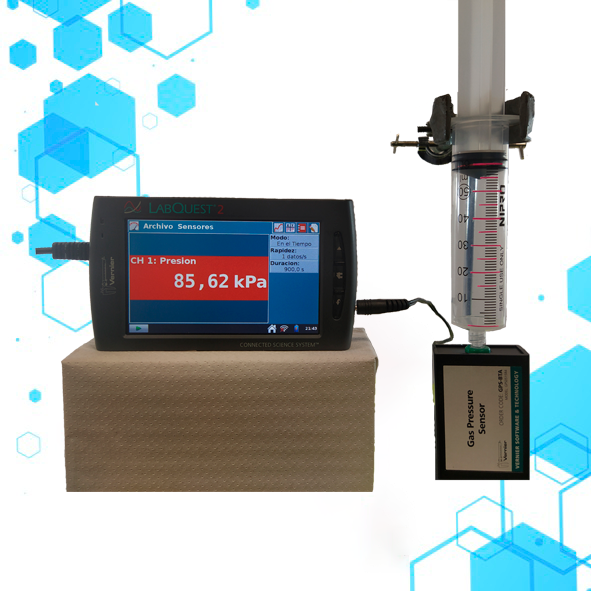
Boyle's Law
  • Boyle's Law
  • 40 min
  • upper secondary science
  • English

Do two Boyle runs agree?

Compare two real Boyle runs at matched volumes and decide what repeatability does—and does not—tell us.

  • Collect matched readings from two prerecorded 60 mL trials.
  • Calculate absolute and percentage differences at three matched volumes.

Mengandungi soalan dan ruangan jawapan untuk pelajar.
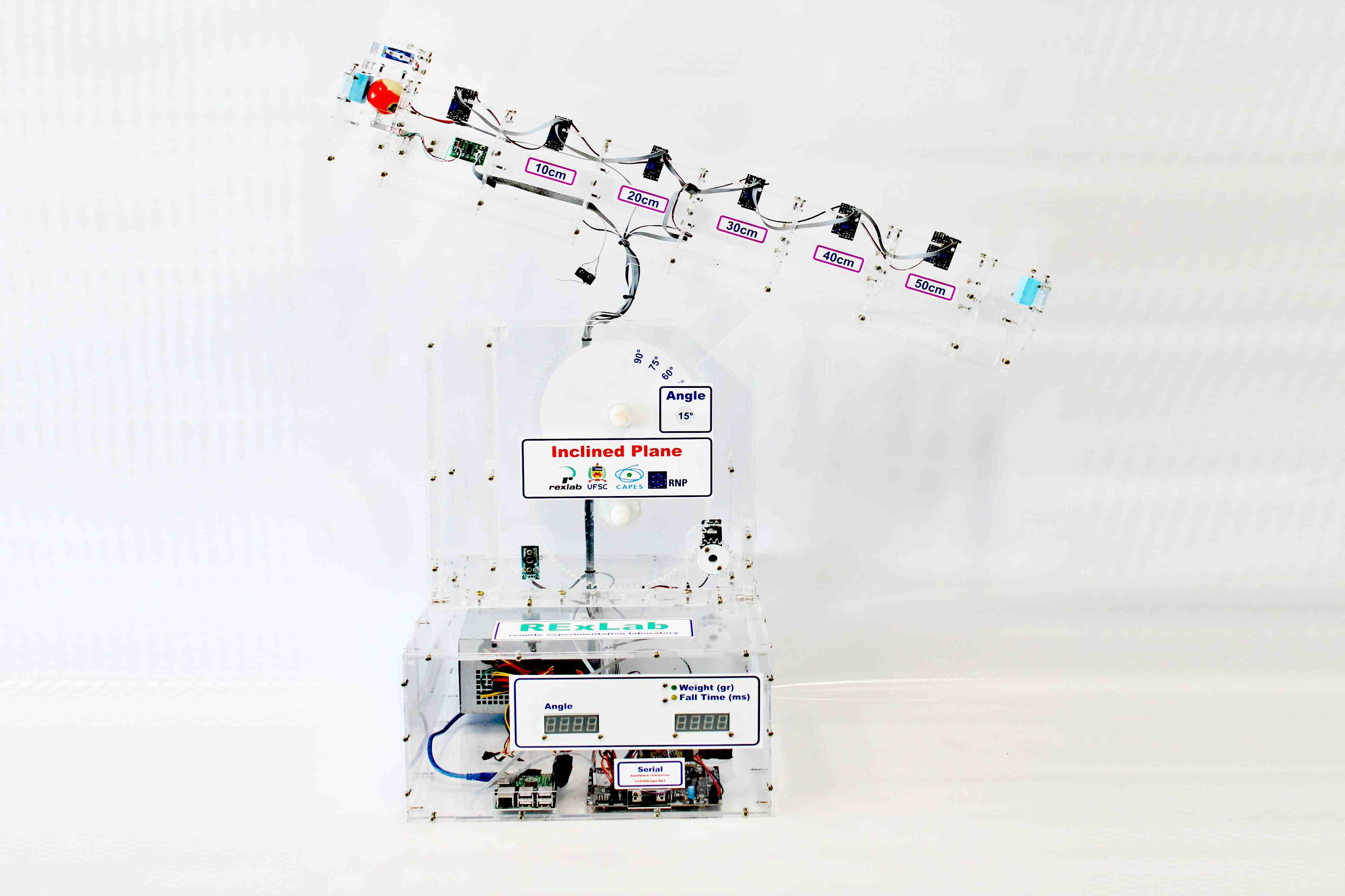
Động học
  • Động học
  • 15 min
  • Cuối cấp tiểu học, 9–12 tuổi
  • Tiếng Việt

Dốc nào giúp viên bi đến đích sớm hơn?

So sánh hai góc nghiêng bằng một viên bi thật và cùng một cảm biến ở đích.

  • Đọc thời gian viên bi đi đến cùng một cảm biến ở hai góc nghiêng.
  • Dùng hai thời gian để xác định lượt nào đến cảm biến đó sớm hơn.

Mengandungi soalan dan ruangan jawapan untuk pelajar.
Boyle's Law
  • Boyle's Law
  • 40 min
  • Ciências no ensino médio
  • Português (Brasil)

Dois ensaios de Boyle concordam?

Compare dois ensaios reais de Boyle em volumes correspondentes e decida o que a repetibilidade nos informa e o que ela não informa.

  • Coletar leituras correspondentes de dois ensaios pré-gravados de 60 mL.
  • Calcular diferenças absolutas e percentuais em três volumes correspondentes.

Mengandungi soalan dan ruangan jawapan untuk pelajar.
Ley de Snell
  • Ley de Snell
  • 32 min
  • Secundaria (12–13 años)
  • Español

El misterio de la pajita rota

Resuelve un misterio cotidiano comparando en el laboratorio remoto cómo atraviesa la luz el agua a 0° y a 60°.

  • Predecir visualmente qué camino seguirá la luz al entrar en el agua.
  • Comparar cualitativamente el rayo en agua a 0° y a 60°.

Mengandungi soalan dan ruangan jawapan untuk pelajar.

Ley de Boyle
  • Ley de Boyle
  • 35 min
  • Secundaria (14–16 años)
  • Español

El reto de la constante PV

Usa cinco pares reales de presión y volumen para decidir si una regla de multiplicación resiste una compresión completa.

  • Recoger cinco pares seleccionados de presión y volumen del ensayo de 60 mL.
  • Calcular PV con unidades coherentes para cada par.

Mengandungi soalan dan ruangan jawapan untuk pelajar.

Valora. Ácido-Base II
  • Valora. Ácido-Base II
  • 30 min
  • Secundaria (12–13 años)
  • Español

El reto del rosa perfecto

Una misión de 25–35 minutos para usar una alarma química y detener una titulación con evidencia visual.

  • Explicar por qué el aspecto de un líquido no basta para conocer sus propiedades químicas.
  • Usar el cambio de color de un indicador como señal para detener el goteo.

Mengandungi soalan dan ruangan jawapan untuk pelajar.

Electronics - Hive
  • Electronics - Hive
  • 30 min
  • First-year university / introductory vocational electronics / upper-secondary electronics
  • English

Electronics Lab Essentials (1/7): read a breadboard before wiring

Students learn how breadboard holes form electrical nodes, trace a complete path, and confirm their interpretation with a real Hive resistance measurement.

  • Define an electrical node and identify connected breadboard holes.
  • Explain why the center trench separates the two terminal strips.

Mengandungi soalan dan ruangan jawapan untuk pelajar.

Electronics - Hive
  • Electronics - Hive
  • 30 min
  • First-year university / introductory vocational electronics / upper-secondary electronics
  • English

Electronics Lab Essentials (2/7): power a circuit with the correct reference

Students learn voltage, polarity, ground/reference, current limiting, and safe power-up habits by measuring two real Hive DC-supply settings.

  • Explain voltage as a difference between two points.
  • Identify positive output, negative output, ground/reference, polarity, and current limit.

Mengandungi soalan dan ruangan jawapan untuk pelajar.

Electronics - Hive
  • Electronics - Hive
  • 30 min
  • First-year university / introductory vocational electronics / upper-secondary electronics
  • English

Electronics Lab Essentials (3/7): measure resistance and voltage correctly

Students choose DMM resistance or DC-voltage mode, connect across the correct nodes, preserve the required powered state, and interpret units and signs.

  • Choose resistance or DC-voltage mode for a stated measurement.
  • Explain why resistance is normally measured on an unpowered circuit.

Mengandungi soalan dan ruangan jawapan untuk pelajar.

Electronics - Hive
  • Electronics - Hive
  • 30 min
  • First-year university / introductory vocational electronics / upper-secondary electronics
  • English

Electronics Lab Essentials (4/7): measure current without creating a short circuit

Students learn why an ammeter is inserted in series, predict and measure real DC current, convert A and mA, and apply a safe physical-meter sequence.

  • Explain why an ammeter is inserted in series rather than placed across a supply.
  • Predict current using Ohm's law and an equivalent resistance.

Mengandungi soalan dan ruangan jawapan untuk pelajar.

Electronics - Hive
  • Electronics - Hive
  • 30 min
  • First-year university / introductory vocational electronics / upper-secondary electronics
  • English

Electronics Lab Essentials (5/7): create a controlled test signal

Students learn waveform, frequency, period, peak-to-peak amplitude, offset, and reference by configuring and observing a real Hive function-generator signal.

  • Identify sine, square, and triangle waveforms.
  • Define frequency, period, peak-to-peak voltage, amplitude, and DC offset.

Mengandungi soalan dan ruangan jawapan untuk pelajar.

Electronics - Hive
  • Electronics - Hive
  • 30 min
  • First-year university / introductory vocational electronics / upper-secondary electronics
  • English

Electronics Lab Essentials (6/7): make a waveform readable and stable

Students learn vertical scale, time base, triggering, two-channel comparison, and graticule measurement using real Hive oscilloscope traces.

  • Relate vertical scale to voltage and horizontal scale to time.
  • Estimate peak-to-peak voltage, period, and frequency from a graticule.

Mengandungi soalan dan ruangan jawapan untuk pelajar.

Electronics - Hive
  • Electronics - Hive
  • 35 min
  • First-year university / introductory vocational electronics / upper-secondary electronics
  • English

Electronics Lab Essentials (7/7): diagnose a bench setup before blaming the circuit

Students integrate breadboard, supply, DMM, generator, and oscilloscope reasoning in three real Hive checks and a reproducible troubleshooting handoff.

  • Choose the correct instrument and powered state for resistance, DC current, and time-varying voltage.
  • Apply a repeatable power-reference-source-path-mode-scale diagnostic sequence.

Mengandungi soalan dan ruangan jawapan untuk pelajar.

Materiales
  • Materiales
  • 55 min
  • Secundaria (14–16 años)
  • Español

Elegir un material: dureza, tenacidad y resistencia

El alumnado usa el laboratorio remoto Materials para comparar evidencias de dureza, impacto y tracción, y recomendar una combinación para una pieza que puede rayarse, golpearse o someterse a cargas capaces de superar el límite elástico y provocar deformación permanente o rotura.

  • Distinguir dureza, tenacidad y resistencia como propiedades diferentes.
  • Evaluar de forma preliminar la idoneidad de una combinación de material / aleación / tratamiento mediante evidencias de la sesión de laboratorio y de referencia.

Mengandungi soalan dan ruangan jawapan untuk pelajar.

Cinemática
  • Cinemática
  • 15 min
  • Anos finais do Ensino Fundamental I e início do II, 9–12 anos
  • Português (Brasil)

Em qual rampa a bolinha chega antes?

Compare duas inclinações de uma rampa usando uma bolinha real e o mesmo sensor de chegada.

  • Ler o tempo de percurso da bolinha no mesmo sensor para duas inclinações da rampa.
  • Usar os dois tempos para decidir em qual teste a bolinha chegou antes àquele sensor.

Mengandungi soalan dan ruangan jawapan untuk pelajar.

Buoyancy
  • Buoyancy
  • 55 min
  • Física do Ensino Médio
  • Português (Brasil)

Empuxo: a densidade prevê a flutuação

Os estudantes usam o laboratório remoto de Empuxo para testar se a densidade do objeto, e não apenas sua massa, prevê se ele flutua ou afunda na água.

  • Calcular a densidade a partir da massa e do volume de objetos reais do laboratório.
  • Prever se um objeto flutuará ou afundará comparando sua densidade com a da água.

Mengandungi soalan dan ruangan jawapan untuk pelajar.

Buoyancy
  • Buoyancy
  • 55 min
  • Extensão de Física para o Ensino Médio
  • Português (Brasil)

Empuxo: mudando o líquido

Os estudantes comparam gravações selecionadas do laboratório de Empuxo em água, óleo e água com açúcar para investigar como a densidade do líquido altera o limite entre flutuar e afundar.

  • Comparar a densidade de um objeto com a densidade de diferentes líquidos.
  • Explicar por que um mesmo tipo de objeto pode se comportar de maneira diferente em óleo, água e água com açúcar.

Mengandungi soalan dan ruangan jawapan untuk pelajar.