Teach Remote lab lessons

Educator catalog

LabsLand Teach lessons

Preview public remote-lab activities before signing in to use them with a class.

Reset
More filters

97 lessons

386 public lessons available

Microscope (Direct)
  • Microscope (Direct)
  • 70 min
  • Secondary school
  • English

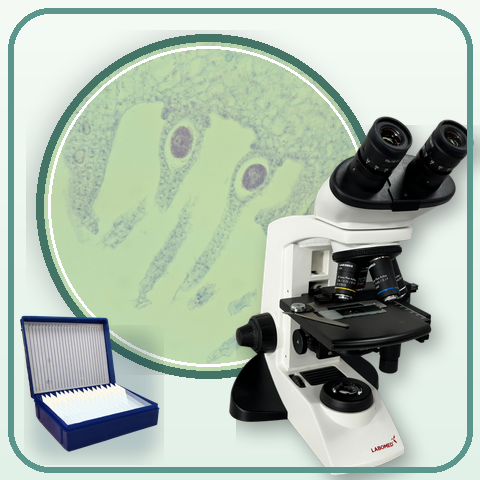
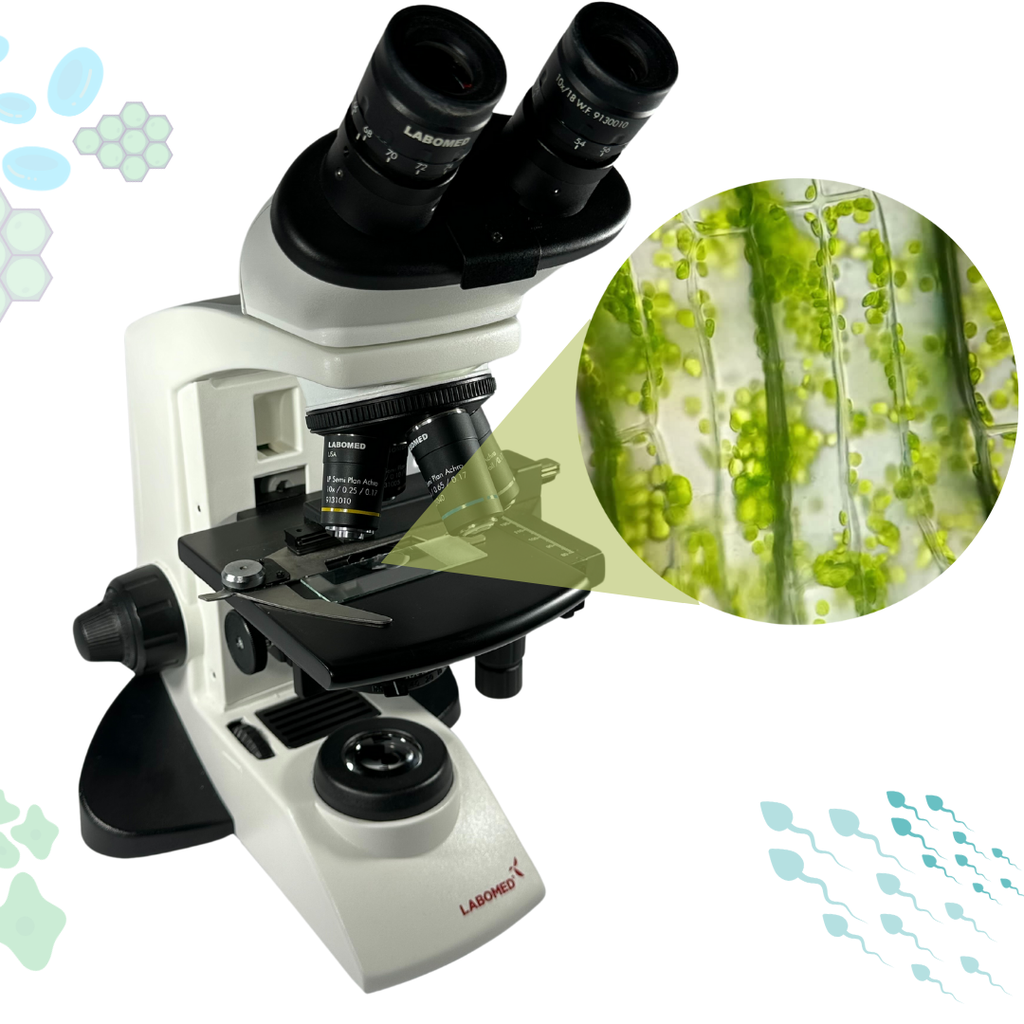
Microscope: discover, prepare, and observe

Students discover the equipment needed for an onion preparation, investigate which tissue transmits light, practice preparing a wet mount, and compare their prediction with a laboratory-prepared reference specimen.

  • Identify equipment used to prepare an onion wet mount by matching each item to its function.
  • Justify which onion layer is suitable using thickness, transparency, and ability to lie flat.

Includes student questions and response prompts.

Microscope (Direct)
  • Microscope (Direct)
  • 45 min
  • Secondary (ages 14–17)
  • English

Microscope: zoom, focus, and cell evidence

Students use the Microscope (Direct) lab to observe one real sample at several zoom levels, adjust focus and lighting, choose visible evidence, and explain a cell identification without inventing unsupported measurements.

  • Use the Microscope (Direct) lab in cell-sample mode to observe one real sample at several objective zoom levels.
  • Explain why 4x, 10x, 40x, and 100x are useful for different observation goals.

Includes student questions and response prompts.

Materials
  • Materials
  • 75 min
  • Introductory university
  • English

Microstructure Analysis: controlled metallography images

Students use the Materials microstructure route to compare etched and non-etched images, section orientation, magnification, focus, and brightness, then connect microstructure observations to mechanical-property hypotheses.

  • Explain why polishing, etching, section orientation, and magnification affect microstructure visibility.
  • Use Materials microstructure controls to compare images systematically.

Includes student questions and response prompts.

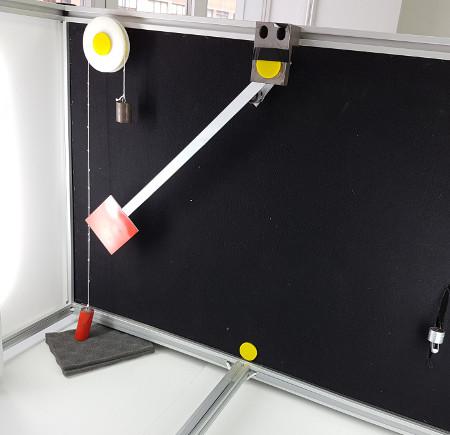
Moment of Inertia
  • Moment of Inertia
  • 40 min
  • Upper-secondary physics
  • English

Moment of inertia: the same masses, near or far from the axis?

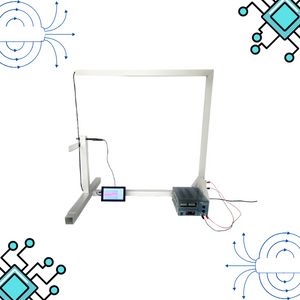
Students use two controlled runs of the Moment of Inertia remote lab to test how moving the same masses changes rotational response.

  • Run a controlled comparison in which only the point-mass distance from the axis changes.
  • Extract peak velocity and elapsed time to peak from the laboratory spreadsheet.

Includes student questions and response prompts.

Newton's Cradle
  • Newton's Cradle
  • 70 min
  • High-school physics / grade 10-11
  • English

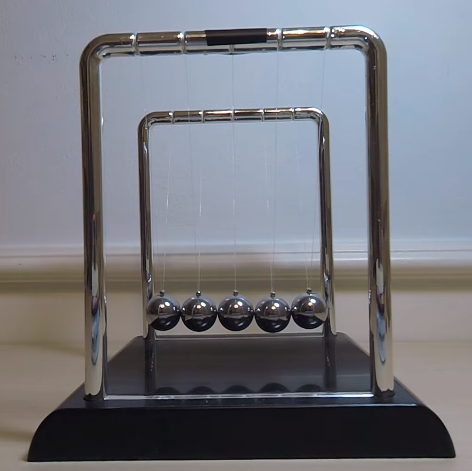
Newton's Cradle: momentum, energy, and real evidence

Students use the remote Newton's Cradle lab to observe 1-, 2-, 3-, and 4-ball releases, explain the pattern with momentum and kinetic energy, and distinguish an ideal model from real video evidence.

  • Observe what happens when 1, 2, 3, and 4 balls are released in a real remote Newton's Cradle.
  • Record how many balls leave after the collision and rate confidence in the observation.

Includes student questions and response prompts.

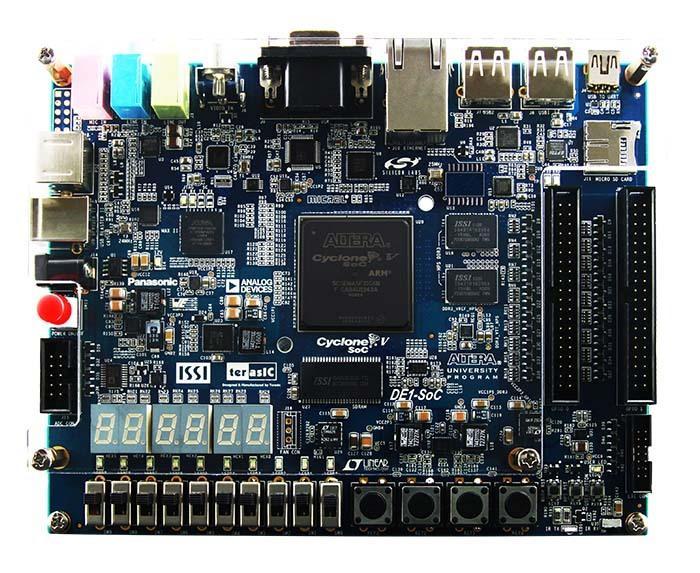
Nios V for DE1-SoC
  • Nios V for DE1-SoC
  • 35 min
  • Undergraduate CS/CE
  • English

Nios V on DE1-SoC (1/5): First run

Students open Nios V CodeIDE on the DE1-SoC, run the prebuilt hello.elf program, and record JTAG UART terminal evidence from the real board.

  • Run a prebuilt ELF on the fixed DE1-SoC Nios V system.
  • Identify Nios V as a RISC-V soft-core CPU implemented inside the FPGA.

Includes student questions and response prompts.

Nios V for DE1-SoC
  • Nios V for DE1-SoC
  • 75 min
  • Undergraduate CS/CE
  • English

Nios V on DE1-SoC (4/5): HEX display and timer

Students build and upload Nios V C examples for HEX0 and the interval timer, then observe HEX0 and LEDR0 behavior on DE1-SoC hardware.

  • Use validated memory-mapped display and timer peripherals in the fixed Nios V system.
  • Explain why seven-segment displays need encoded segment patterns.

Includes student questions and response prompts.

Materials
  • Materials
  • 75 min
  • Introductory university
  • English

Notched-Bar Impact Testing: toughness and fracture evidence

Students use the Materials remote lab to observe notched-bar impact tests, connect absorbed impact energy with toughness, compare treatments, and interpret fracture surfaces cautiously.

  • Explain why notched-bar impact tests are used to compare toughness.
  • Use impact-test video/result evidence to compare material treatments.

Includes student questions and response prompts.

Electronics - Hive
  • Electronics - Hive
  • 50 min
  • Lower secondary / early high school
  • English

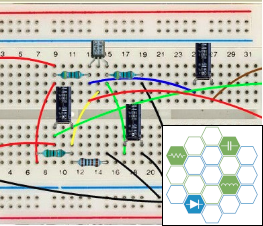
Ohm's Law with Hive: measure a real current

Students use a prepared resistor circuit in LabsLand Hive, measure the real current with the multimeter in DC current mode, and check whether the result fits V = I · R.

  • Distinguish voltage, current, and resistance in a simple circuit.
  • Measure current in a real Hive circuit without modifying a safe prepared setup.

Includes student questions and response prompts.

Pendulum
  • Pendulum
  • 55 min
  • Secondary (ages 15–16)
  • English

Pendulum: how length affects the period

Lower-secondary (4 ESO) activity that uses the Pendulum remote lab to measure real periods and decide how the period changes when the pendulum is made shorter or longer.

  • Tell apart period, oscillation, amplitude, length, and the variables of an investigation.
  • Use the Pendulum remote lab to measure the period of a standard pendulum and a short pendulum at the same initial angle.

Includes student questions and response prompts.

Pendulum
  • Pendulum
  • 70 min
  • Secondary (ages 16–17)
  • English

Pendulum: model, T², and effective length

Upper-secondary (1º Bachillerato) activity that uses the Pendulum remote lab to measure periods, linearise with T², and discuss how far the ideal model fits.

  • Measure periods from the Pendulum remote lab while keeping the initial angle constant.
  • Calculate T² from the mean period and use it to analyse the relationship with effective length.

Includes student questions and response prompts.

Pendulum
  • Pendulum
  • 55 min
  • High school physics / upper secondary
  • English

Pendulum: what controls the period?

Advanced inquiry in which students use the Pendulum remote lab to test whether initial angle or pendulum configuration (including soda-can positions) has the larger effect on period.

  • Use the Pendulum remote lab to collect angle-time evidence from the lab or teacher-provided reference data.
  • Estimate pendulum period from repeated cycles or same-direction crossings.

Includes student questions and response prompts.

Planarians
  • Planarians
  • 40 min
  • Lower secondary / early high school
  • English

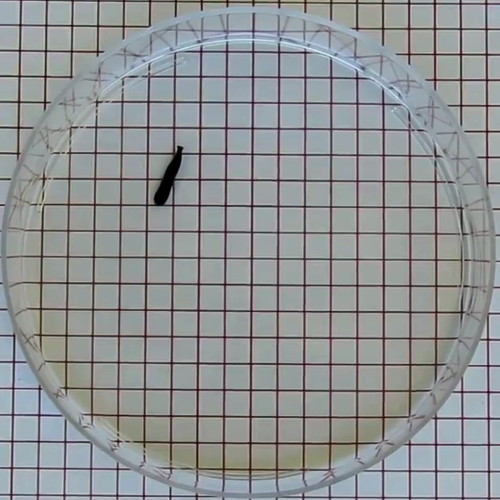
Planarian Detectives: identify the mystery substance

Short lower-secondary activity: students open Planarians in detective mode, count line crossings for control E and two mysteries, identify the high- and low-movement mysteries, and write a cautious evidence-based conclusion.

  • Define a fair rule for counting line crossings during a planarian observation.
  • Use substance E as the water control when comparing two mystery substances.

Includes student questions and response prompts.

Plant Tissues
  • Plant Tissues
  • 60 min
  • High school biology
  • English

Plant tissues: monocot/dicot stems under the microscope

Students use the Plant Tissues remote lab to compare monocot and herbaceous dicot stems, identify vascular bundles, and defend a classification with real microscope evidence.

  • Open the Plant Tissues lab and select the Agricultural Botany collection.
  • Compare a monocot stem and an herbaceous dicot stem at 4x, 10x, and 40x.

Includes student questions and response prompts.

Boyle's Law
  • Boyle's Law
  • 35 min
  • middle to upper secondary science
  • English

Pressure limit: how far can we compress?

Turn three readings from a real syringe run into an engineering recommendation with a pressure limit and safety margin.

  • Collect pressure readings around a 150 kPa design limit.
  • Identify the observed passing/failing bracket between tested settings.

Includes student questions and response prompts.

Radioactivity
  • Radioactivity
  • 40 min
  • Ages 15-17 / introductory upper secondary
  • English

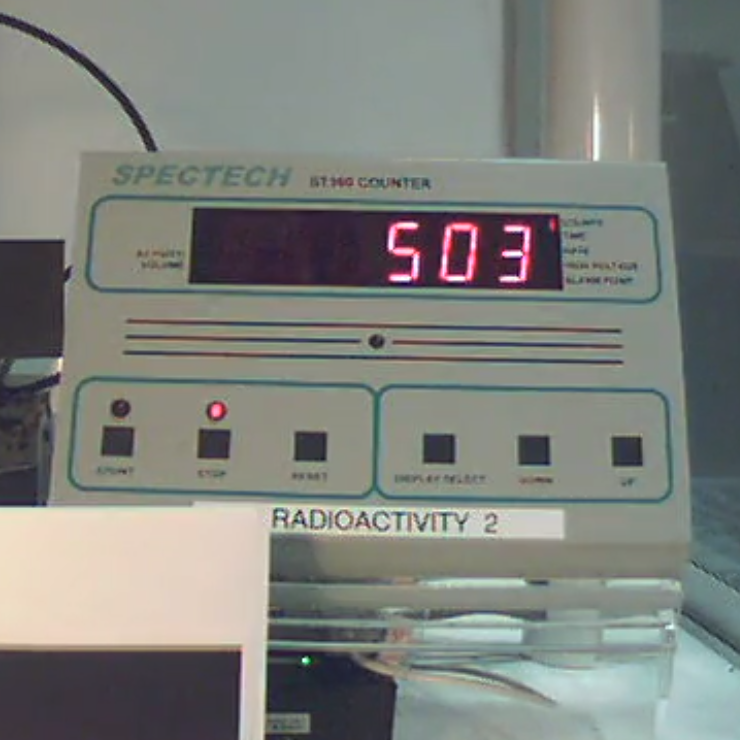
Radioactivity 1/2: counts and distance

Students use repeated measurements from the remote lab to investigate how the detected count changes as distance increases and whether a straight line describes the pattern well.

  • Distinguish detector counts from personal radiation dose.
  • Use three repeats and a mean to compare measurements that vary.

Includes student questions and response prompts.

Radioactivity
  • Radioactivity
  • 55 min
  • Ages 15-17 / introductory upper secondary
  • English

Radioactivity 2/2: shielding and penetration

Students compare seven remote-lab configurations, calculate the percentage of the detected count that remains, and use the pattern to identify evidence consistent with alpha, beta, and gamma radiation.

  • Compare absorbers while keeping distance, duration, and number of repeats constant.
  • Calculate the percentage of the detected count that remains relative to the control for the same source.

Includes student questions and response prompts.

Snell's Law (II)
  • Snell's Law (II)
  • 70 min
  • Secondary (ages 15–18)
  • English

Snell's Law: measure refraction with a real protractor

Students use the Snell's Law (II) remote lab to read incident and refracted angles, calculate refractive index, compare media, and observe total internal reflection.

  • Measure incident and refracted angles from the normal using the Snell's Law remote lab.
  • Calculate refractive index from n = sin(i) / sin(r) when light passes from air into a medium.

Includes student questions and response prompts.